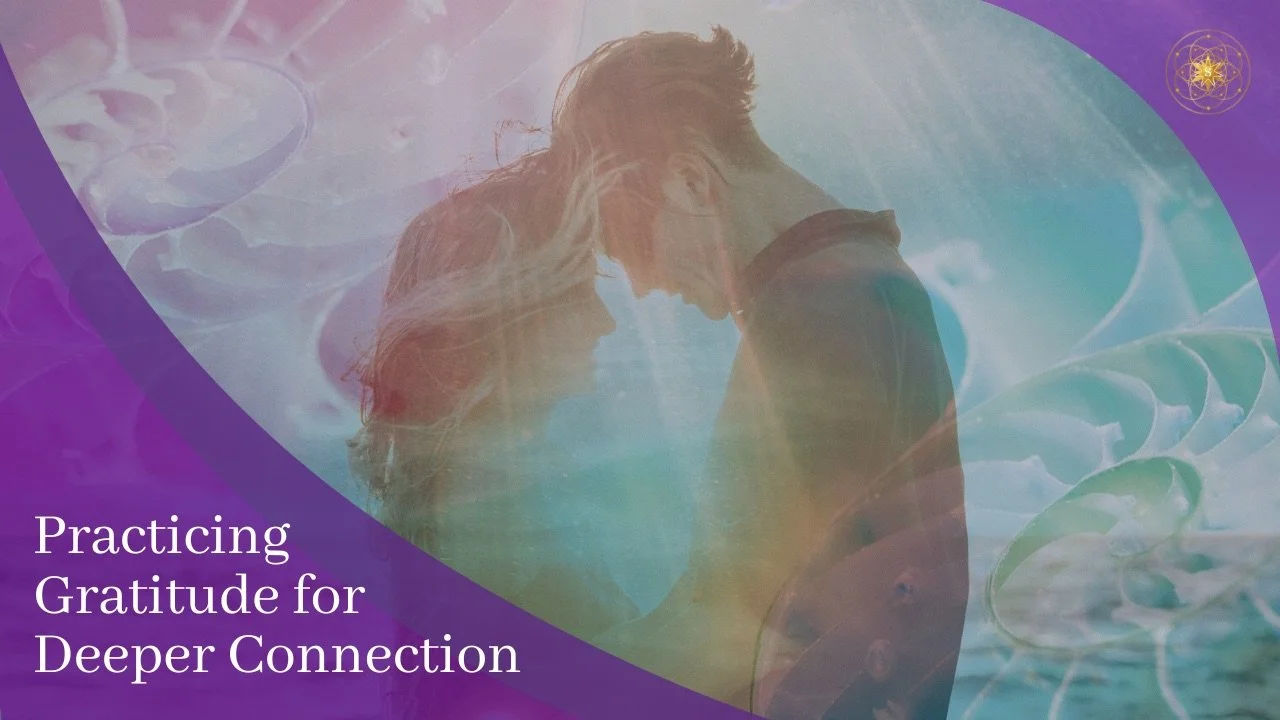
As we continue to explore Sacred Relationships, I want to focus for a moment on the importance of gratitude. It’s a big one in relationships of all kinds, not just with your partner.
When examining our life experiences and Early Childhood Treasure Map, we often find ourselves patterned to think the glass is half full, to dwell in places of negativity. So the ego mind is always looking for negative experiences based on the formation of our brain and energy system from much earlier in life.
For generations, we’ve been living out the past. And yet, we’re capable of so much more, especially right now in this quintessential time of evolution on our planet.
The brain has many functions and abilities to transform that are truly profound. New strides in neuroplasticity are encouraging us to reframe what’s possible to optimize, rewire, continued learning, improved mood, and memory function.
Once you learn to harness the power of the supercomputer that is your brain, you can operate from an elevated and harmonious space within the mind – conscious, subconscious, and superconscious.
You dream, envision, and imagine a life for yourself and your partner because you know it’s possible somewhere deep within your heart and soul. Those dreams begin to become your reality in the most incredible and synchronistic ways. Did you know that your brainwaves function similarly during imagined and actual experiences? It’s a mind blowing concept backed by science.
How do you get there?
It’s a quandary of how you can let the past go and live in the present to create an entirely new life, the one you’ve desired in the depths of your soul.
This is the question that we’ll seek to answer at the upcoming retreat I’m hosting with Shawn Christian, a purpose and mindset coach and dear ally passionate about supporting others to create the life they imagine.
I’ll be teaching you how to connect the dots of soul psychology during our time together, to identify and clear patterns limiting you from fully experiencing a loving and harmonious connection with your loved one.
All the while, creating space to release those emotions, thoughts, and beliefs that no longer serve you through vibrational medicine techniques.
When working in the psychodynamic realm, sustainable change is created through anchoring the wisdom of your soul in the present moment.
To anchor and actualize these teachings in your present reality, we’ll explore sacred aromatics and their vibrational frequencies to modulate and transmute your past patterns, literally creating new neural pathways for your most benevolent life of harmony, nurture, and abundant love to unfold.
So where does gratitude come in?
If you’re constantly focusing on your cup being half full – what your partner doesn’t do right or well or all, and you feel angry, resentful and disappointed, those thoughts, feelings, and their verbal representations will magnetize more of the same in your relationship.
I see this even in my own relationship. When I start to get irritated because something I think, want, or feel should happen at any given moment, my mate can feel that. It creates a dissonance between us that can spiral quickly if we let it. If I let myself go down that rabbit hole of negativity of bickering and bitterness that was so common in my own early childhood environment.
Our words create our reality.
Our language comes from our thoughts, feelings, and ultimately our belief system. The more that we continue the old pattern of our language, the more we’re programming our future expectation and manifesting the same unwanted outcomes.
In particular, when we consider the contributions of innovative science from Candace Pert, Molecules of Emotion, Dr. Bruce Liption, The Biology of Belief and Masaru Emoto, Hidden Messages in Water spark great insight as to how our intention, energy, vibration and language, our words affect our physiology, emotions, and create our future experience of not only life, but all of relationships, especially our love relationship.
What do we know about gratitude?
Gratitude is like love – one of the highest vibrational forces upon this planet.
When we immerse ourselves in the energy of gratitude, it not only fills our being and soul, but begins to ripple out around us. Gratitude becomes a point of attraction with the universe to magnetize further experiences in which we can be grateful.
So instead of thinking and feeling frustrated, the mind can switch to the things that your partner does well, in a loving way.
Suddenly, you realize, Oh, I’m getting more of this, why am I getting more of this?
Where your attention goes, your energy flows.
You’re getting more of it because that’s what you’re focusing on.
Your focused energy creates your new future realities and experiences. Even your new future emotions.
Gratitude becomes this beautiful clay within your relationship.
I like this vision of a couple coming together with a beautiful pottery wheel between them. What they can sculpt together is all of the things that they’re grateful for about each other. Those beautiful things that they’re grateful for begin to blossom, and expand.
As the energy expands, they become much more abundant.
Feelings of love and abundance aren’t only filling their relationship, but filling their home, family members, and becoming contagious to their friends.
The feelings are palpable.
The couple now exudes a sense of love, reverence, gratitude, and simple appreciation, all because of a shift into gratitude.
To learn how to embody these techniques and infuse this nature of richness into your relationship, consider joining us for our Sacred Relationship Retreat in beautiful Malibu May 6th. Feel free to schedule a call with me to explore these possibilities and more.
In great love and gratitude,
Adora
If you enjoyed this blog, I invite you to join the Quantum Community and explore our vast library of alchemical resources to curate and elevate your path of self-mastery.
Let’s build a quantum community on social!
Join our free monthly Seeds of the Spirit Circle and Meditation. LEARN MORE HERE
Visit Adora’s YouTube channel for more meditations.
Follow @adorawinquist on Instagram!
Disclaimer:
None of the statements on this web site have been evaluated by the FDA. Furthermore, none of the statements on this web site should be construed as dispensing medical advice, making claims regarding the cure of diseases, nor can these products prevent heat stroke, hyponatremia, or any other injurious results of excessive physical exhaustion. You, the athlete, must listen to your body and use common sense to avoid serious injury. You should consult a licensed health care professional before starting any supplement, dietary, or exercise program, especially if you are pregnant or have any pre-existing injuries or medical conditions. These statements have not been evaluated by the Food and Drug Administration. These products are not intended to diagnose, treat, cure, or prevent any diseases.